
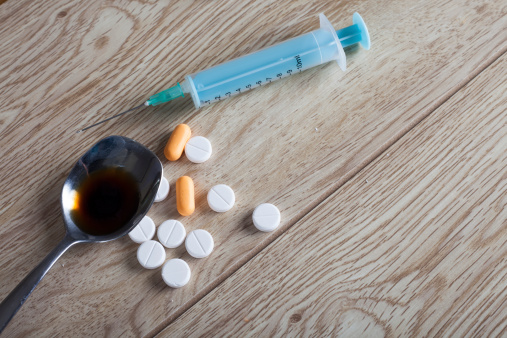
A vaccine that could stop heroin addiction in its tracks would seem to be a good solution in light of the epidemic that is happening right now. But while researchers in La Jolla, CA at The Scripps Institute have developed a new heroin specific vaccine that is having astonishing results when tested on animals, both federal and private research funding have been ignored.
Professor Kim Janda, the Director of the Wirm Institute of Research and Medicine, and Professor George F. Koob, Chair of the Committee on the Neurobiology of Addictive Disorders, published their findings on May 6, 2013 in the Early Edition of the Proceedings of the National Academy of Sciences.
Using the same approach as the cocaine vaccine, which you may have heard of, and is beginning to enter human trials at the Cornell Medical Center, this vaccine is considerably more specific with its targeting mechanism. And at this stage in the game, with these kind of results, the hope at Scripps was that the next level of research funding would be available to determine whether such a targeting mechanism will deliver effective and lasting results in human subjects. Further testing is needed to figure that out and if any complications could arise due to human physiology, ya know, the stuff like free will, and impulses.
According to the research team, a core attribute of the new vaccine that makes it superior to previous attempts is that it addresses the complexity of heroin as it breaks down in the human body.
“Previous vaccines didn’t take into account these breakdown products,” Janda said. “They didn’t have the specificity of this vaccine that focuses exclusively on heroin. The goal was to stop the morphine from crossing the blood brain barrier.
“This vaccine was designed to counter all of the breakdown products involved with heroin in particular. You need to look at how the drug interacts with the body and how the body interacts with the drug.”
The early research on and testing of Janda’s heroin vaccine was funded by the Scripps Research Institute, the Pearson Center for Alcoholism and Addiction Research at TSRI and by the National Institute of Health (NIH). Given the positive results, you would think obtaining the needed funding from the government or a pharmaceutical company for human trials in exchange for the rights to the vaccine would not be a problem.
But you are wrong. Despite the outreach by Janda and others on his behalf, the NIH, whose budget was cut by congressional “sequestration,” isn’t stepping up nor has any pharma company offered funding. The general idea is that there is no money to be made in funding a heroin vaccine.
According to the Foundation for a Drug-Free World, an estimated 9.2 million people used heroin in 2008 worldwide. According to a Central Intelligence Agency Report in 2012, “There are an estimated 2 million heroin users in the United States, with some 600,000 to 800,000 considered hardcore addicts.”
Not only have such numbers not created the impetus for investment in a heroin vaccine, Janda has not even been able to raise $50,000 needed to renew the patent on the specific medical technology behind the development of the vaccine. This raises the possibility that some pharmaceutical company might seize the work for itself once the patent expires.

@DTCFinder
Sean Levine
Latest posts by Sean Levine (see all)
- What is Alcoholics Anonymous? - July 8, 2014
- Finding the Right Drug Treatment Center - July 7, 2014
- The 12 Steps: Spiritual or Religious Recovery? - July 7, 2014